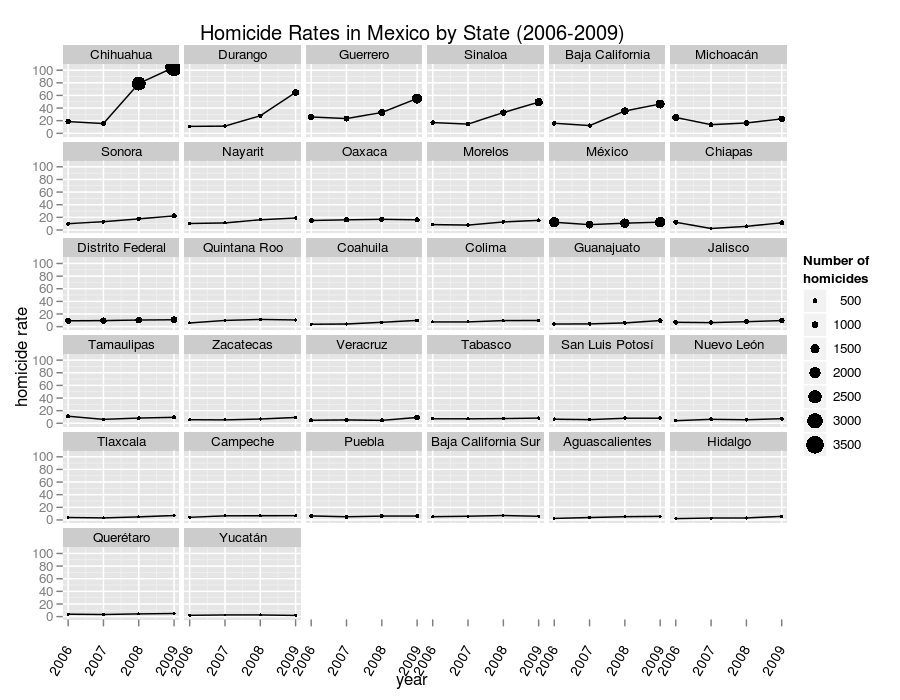
By State:
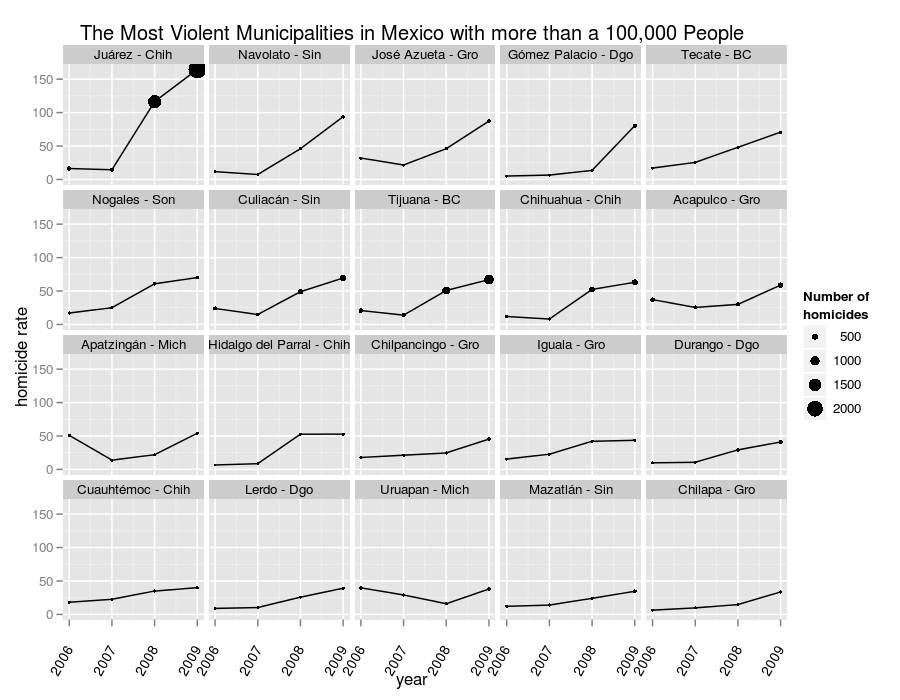
Ciudad Juárez was again the most violent municipality with a total of 2316 (about 2375 taking into account that there wasn’t enough time to record all homicides that occurred in 2009 into the database) which is much lower than the press reports of about 2700.
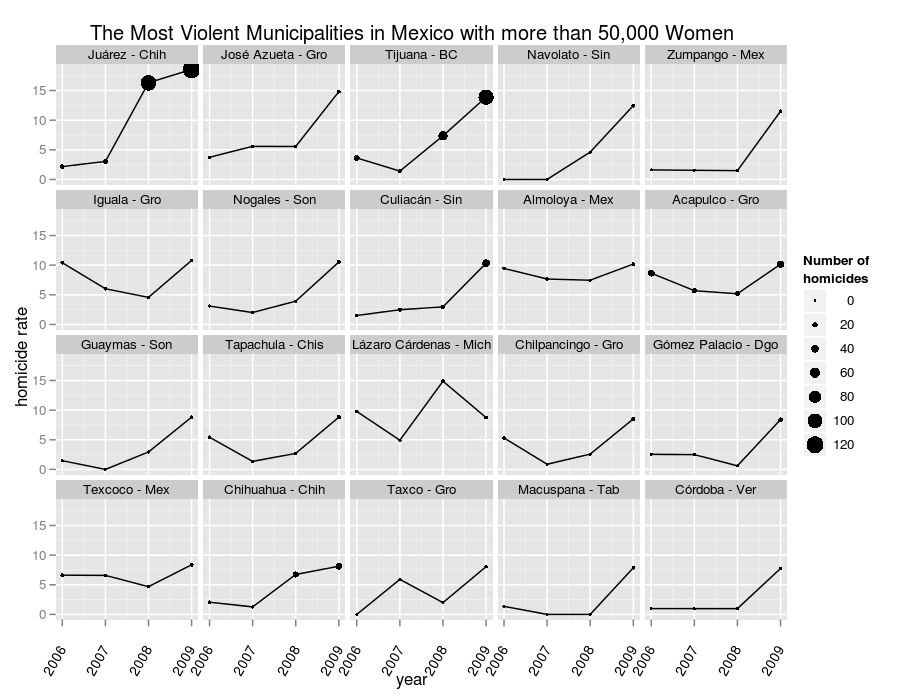
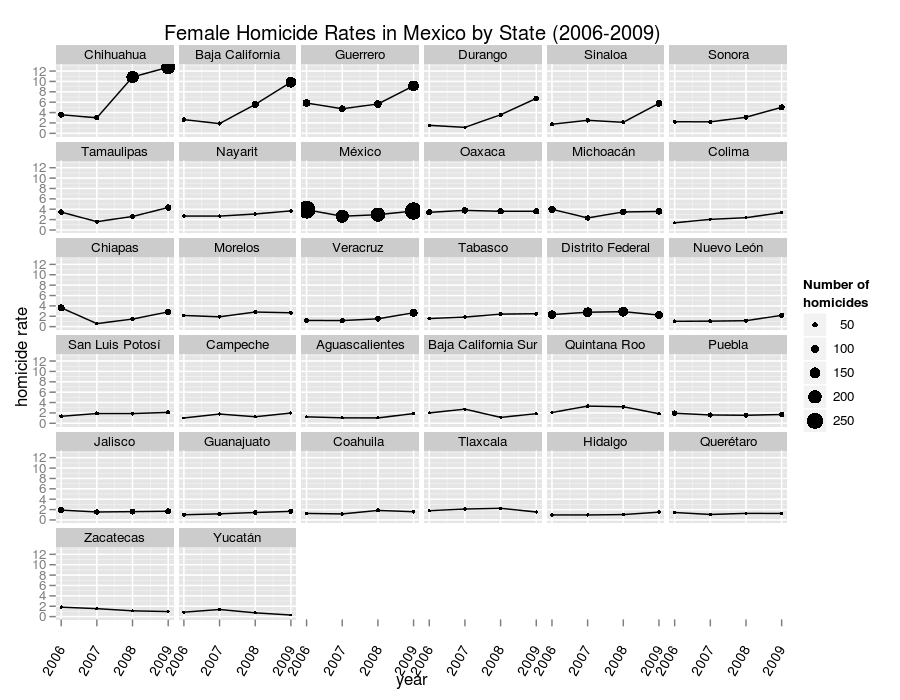
What stands out from the chart of the most violent municipalities for females is that Almoloya and Texcoco in the state of Mexico made the list (hint hint future gubernatorial candidates).
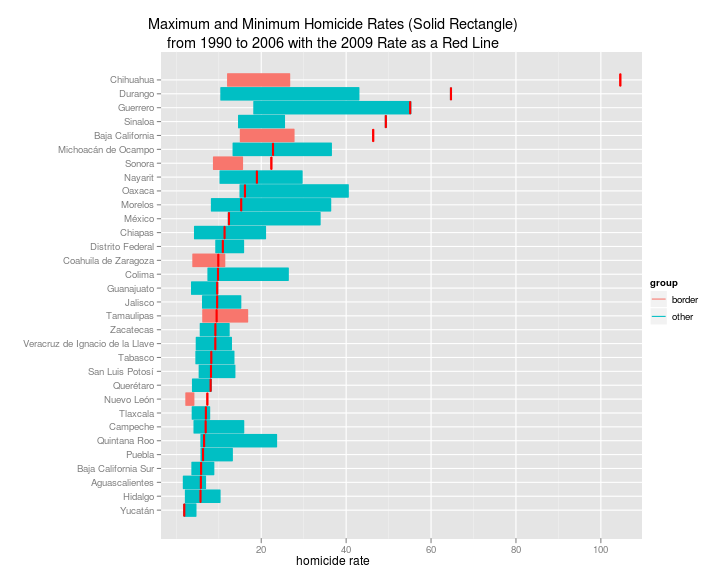
In this chart I show the maximum and minimum homicide rates from 1990 to 2006 (right before the drug war started) and compare it with the 2009 rate to put it in historical perspective:
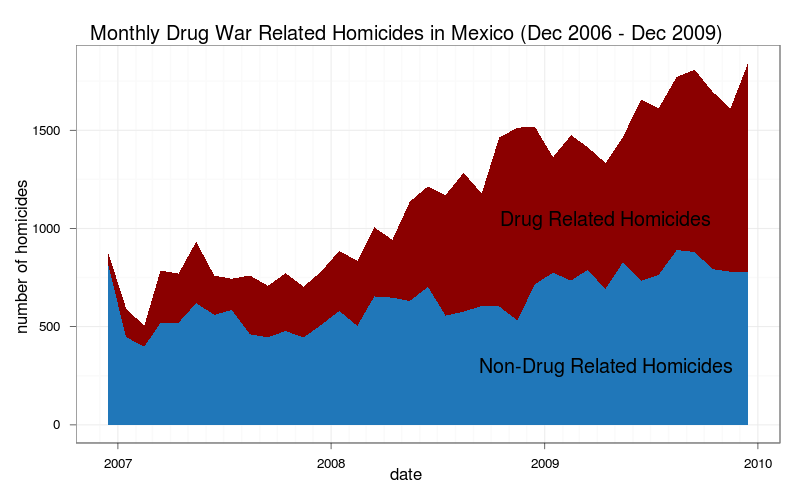
The monthly totals:
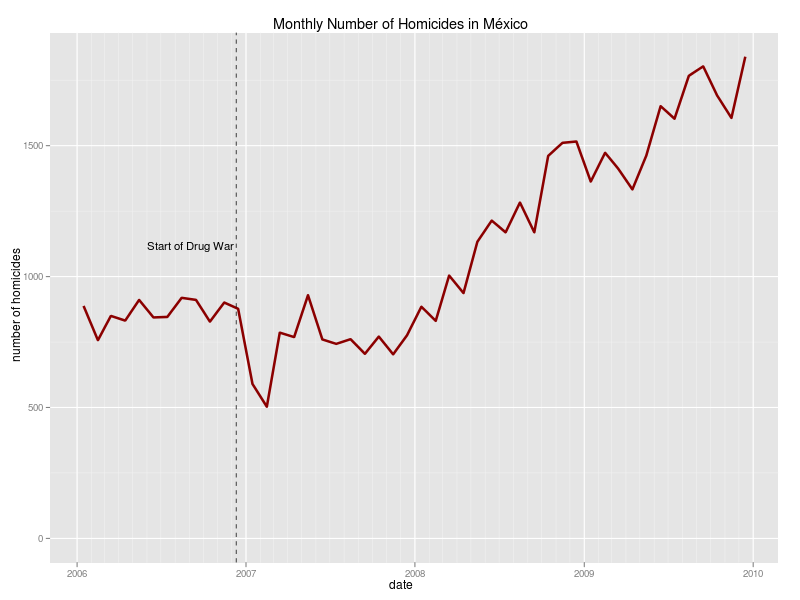
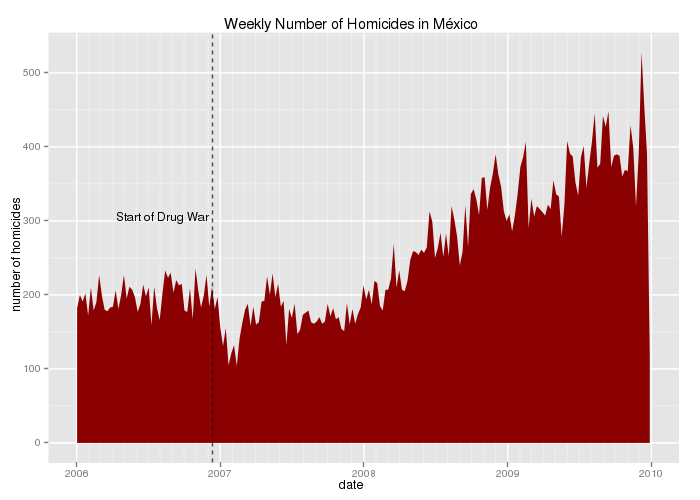
If the data follows the same pattern as in 2008, homicides in 2009 were under-counted by
about 4%, which is perfectly understandable since there isn’t always time to enter into the database those homicides that occured during the last weeks of the year and the cutoff is December 31, 2009.

Taking into account the undercount for the last year the totals would be:
2006 - 10,429
2007 - 8,843
2008 - 14,175
2009 ~ 19,900 (19,121 recorded in the database)
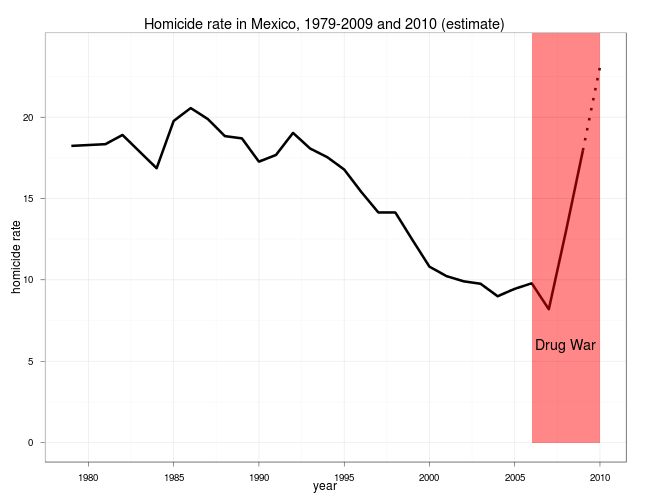
which assuming a population of 111 million (there were 112.3 million Mexicans in the 2010 census) would give a homicide rate of:
which is of course quite different from the 16,117 homicides according to police reports, and their corresponding rate of 15.
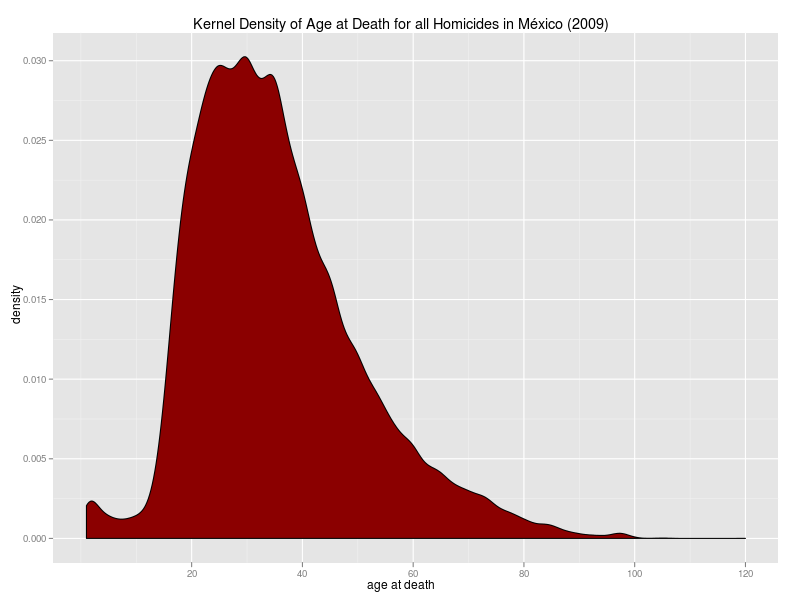
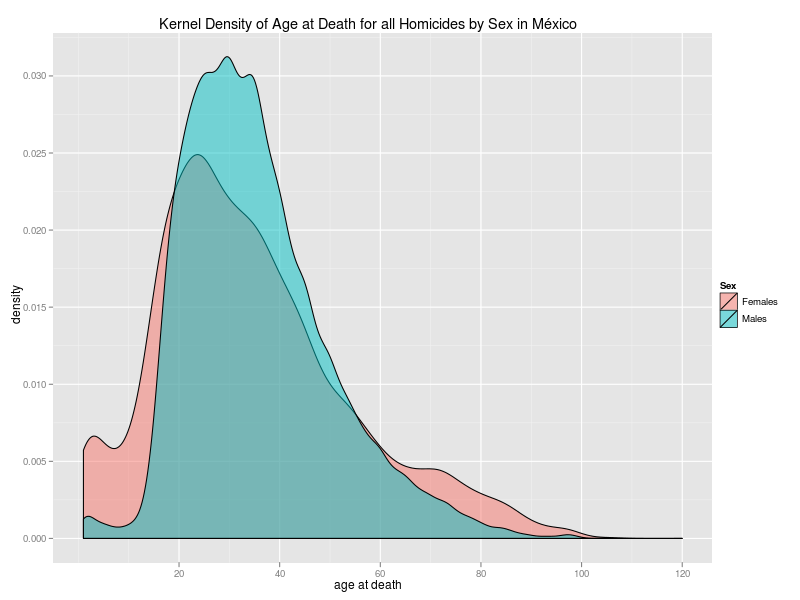
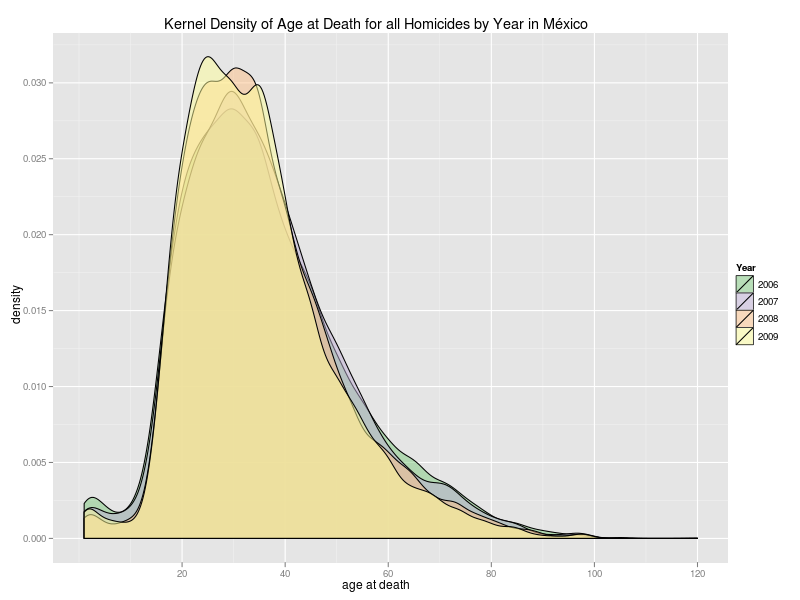
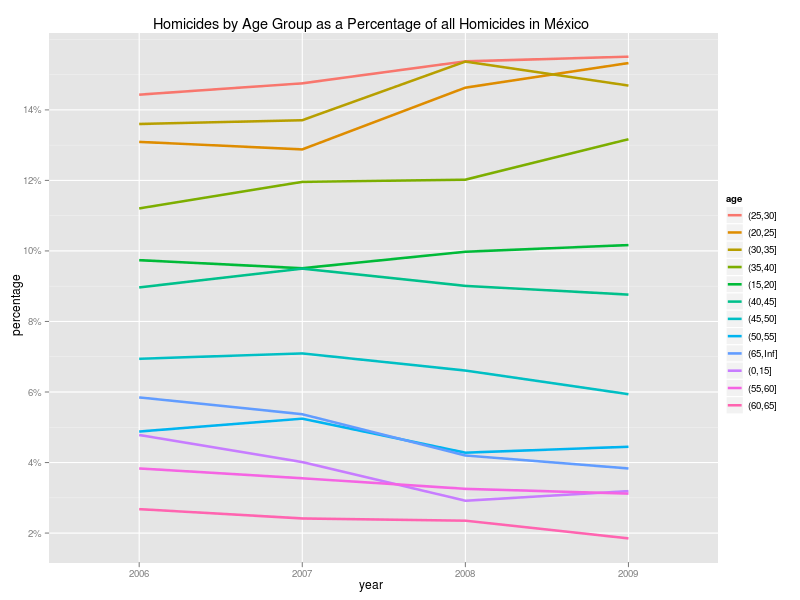
The mean age for homicide victims in 2009 was 34.6 with a sd of 14.3 years (it hasn’t changed significantly since 2006):
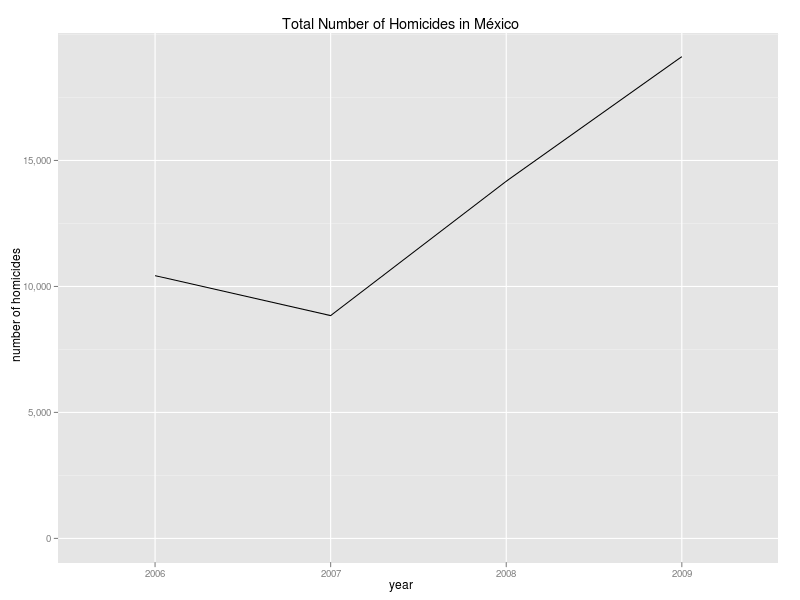
Taking into account the undercount for the last year the totals would be:
2006 - 10,429
2007 - 8,843
2008 - 14,175
2009 ~ 19,900 (19,121 recorded in the database)
which assuming a population of 111 million (there were 112.3 million Mexicans in the 2010 census) would give a homicide rate of:
18
which is of course quite different from the 16,117 homicides according to police reports, and their corresponding rate of 15.
The mean age for homicide victims in 2009 was 34.6 with a sd of 14.3 years (it hasn’t changed significantly since 2006):
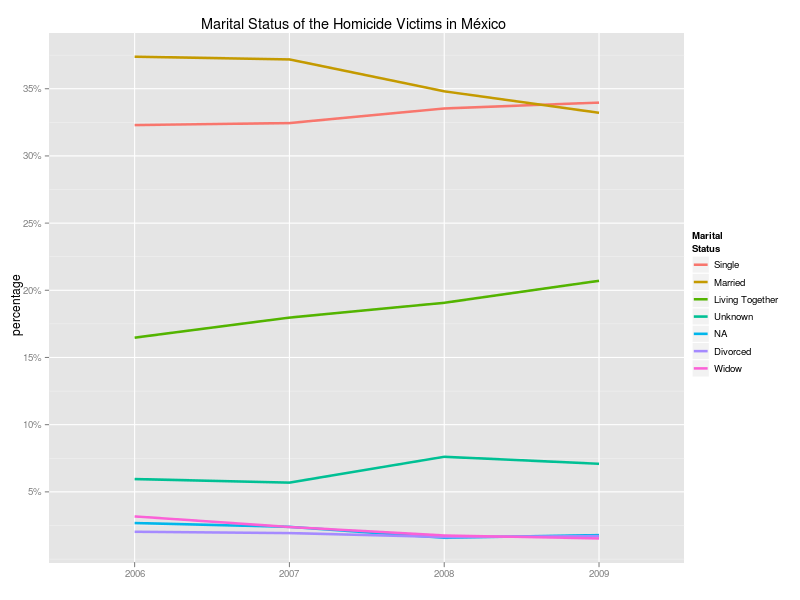
Marital status of the homicide victims:
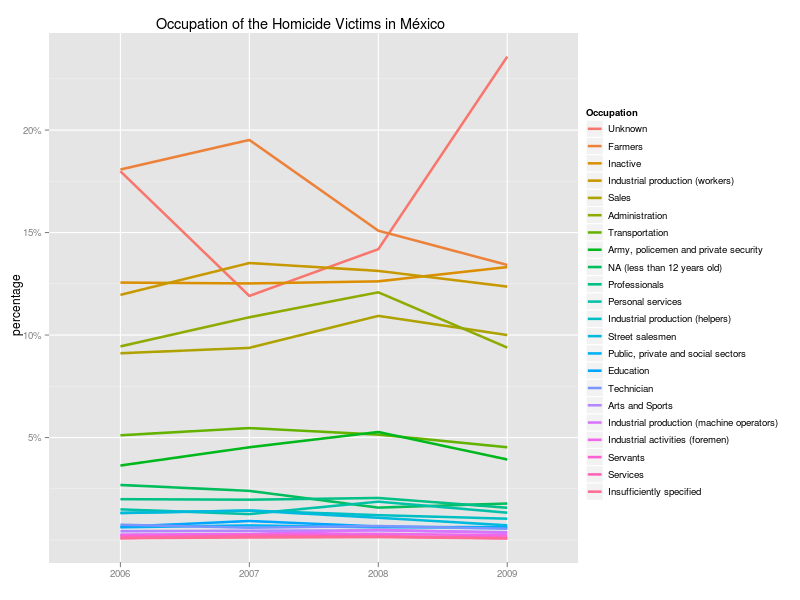
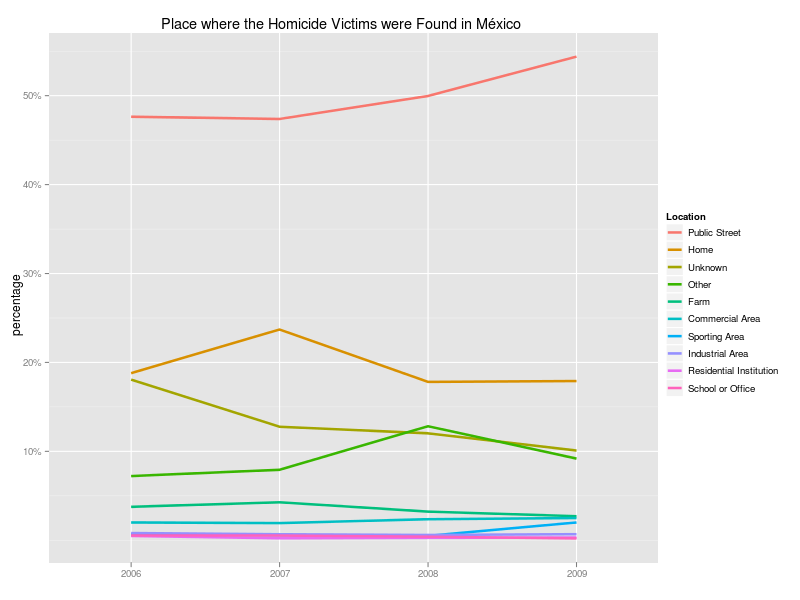
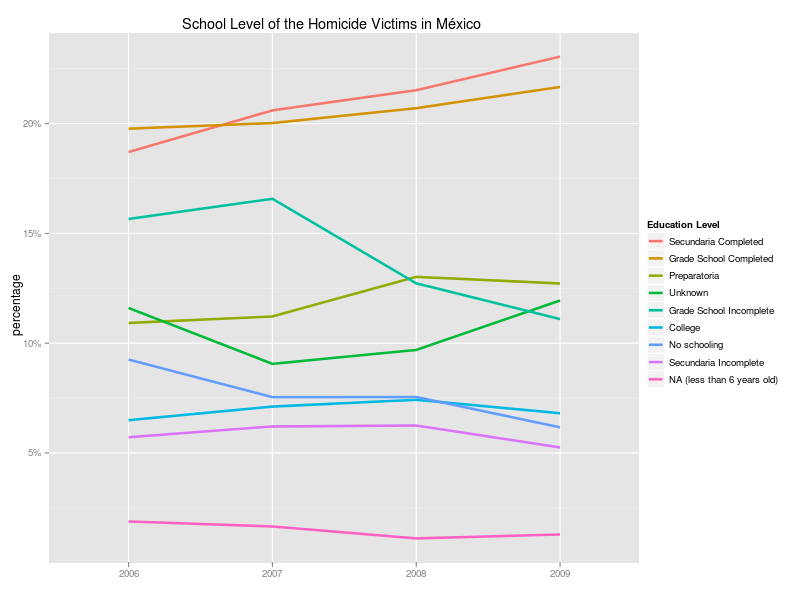
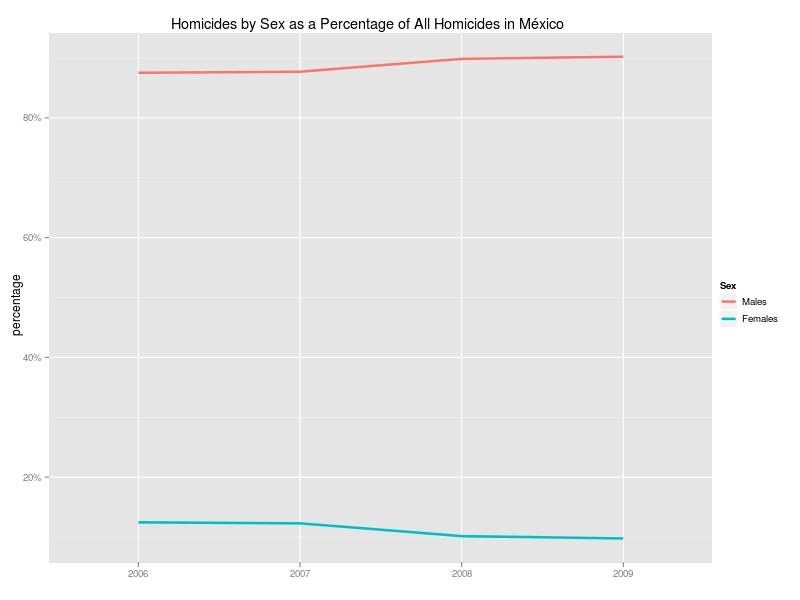
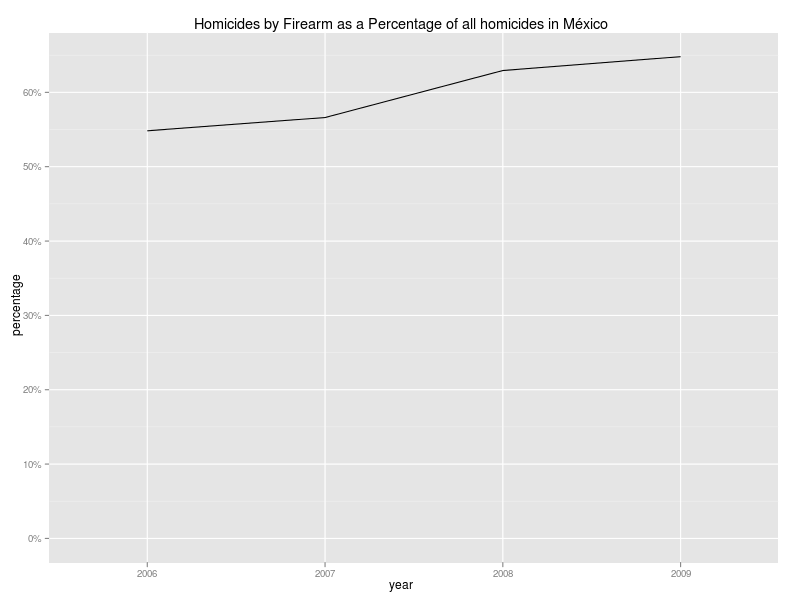
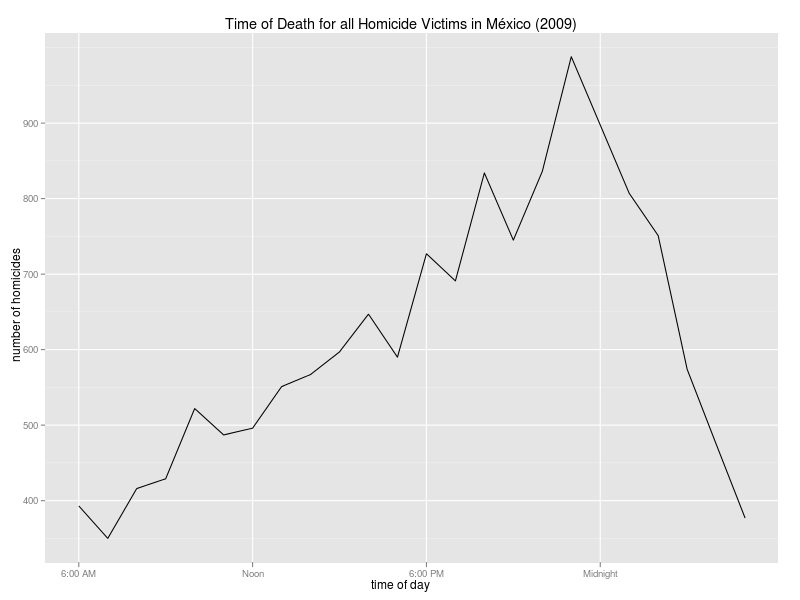
(There was a mistake in the database, when the hour of death was unknow it was coded as having occurred at midnight, I discarded that value and used the average of the number of homicides between 11:00pm and 1:00am)
P.S. The code is at my GitHub